

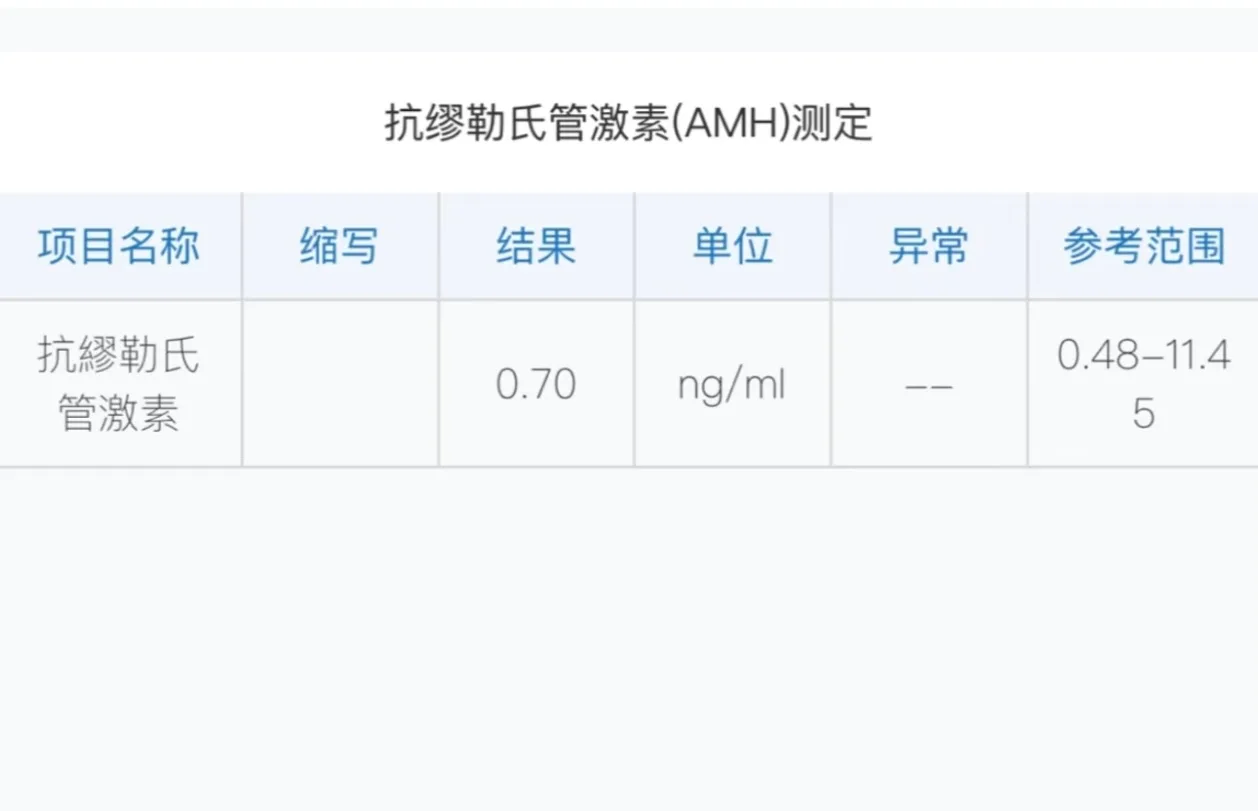
At the age of 39, Sister Zhou received her AMH test results: 0.7 ng/ml.
According to the report, her value falls within the "reduced ovarian reserve" category. The doctor explained straightforwardly that at this age and with this level of value, the chances of natural pregnancy are quite low. She should consider alternative methods of conception immediately, such as assisted reproduction.
Like many women who are trying to conceive at an advanced age, Sister Zhou was hesitant at first. She tried various treatments over half a year, including taking traditional Chinese medicine, monitoring ovulation, and planning dates for intercourse. But every month ended in disappointment. Time became something extremely precious-every additional month meant a decrease in ovarian reserve.
1. Instead of relying on luck, it's better to undergo thorough evaluations first.
With the help of the experts at LeilaWa, Sister Zhou decided not to start treatment immediately. Instead, she underwent a comprehensive fertility assessment: basal hormone levels, number of antral follicles, thyroid function, and uterine environment checks-none were missed.
The results were clear:
- AMH: 0.7 ng/ml - Number of antral follicles: 5–7 per side - This indicates a low-response ovary condition
- Uterine environment is healthy, endometrium is normal, no obvious structural issues - Male semen parameters are generally acceptable
Based on the evaluation results, the experts objectively analyzed the pros and cons of two options: continuing natural conception, which has low chances of success and unpredictable time costs; or starting IVF as soon as possible, to maximize the chances of getting eggs while there are still available follicles. They also informed her that due to advanced age and low ovarian reserve, the number of eggs available will be limited, and the risk of chromosomal abnormalities in embryos is higher than in younger individuals. She needed to be prepared for this possibility.
2. Why choose Thailand? The laboratory facilities and blastocyst culture are highly regarded.
1. The reproductive center in Thailand has a well-established system for embryo culture and grading. They are more experienced in caring for small numbers of eggs.
2. Embryo culture and genetic screening can be carried out directly after egg retrieval. This allows for the selection of embryos with normal chromosomes, thereby reducing the risk of miscarriage in older women.
3. The process is streamlined, with a clear timeline from ovulation induction to transplantation. This makes it suitable for working people with limited vacation time.
The team at Leilawa matched her with a reproductive center and doctors who specialize in treatments for patients with low ovarian response. We also arranged the initial consultation time, ensured mutual recognition of test results, and provided translation services during consultations, so that she could start treatment right away upon arriving in Thailand.
III. Cycle Review: 6 eggs, 4 high-quality embryos
Throughout the ovulation induction cycle, a gentle stimulation protocol was used. The focus wasn't on quantity, but rather on maintaining the quality of each egg.
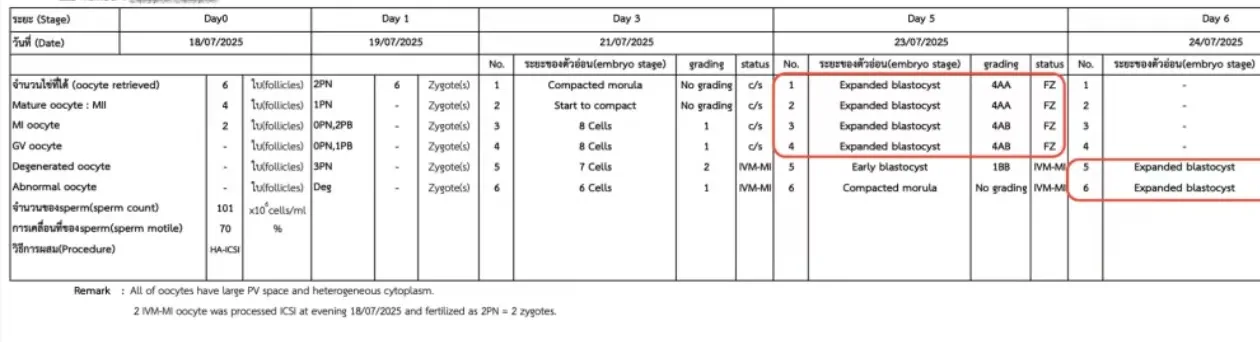
**IV. One Take, One Transfer: Stable Pregnancy**
For this case, a natural cycle approach was used for endometrial preparation. Hormone replacement therapy was adjusted until the endometrial thickness reached the required level, after which single blastocyst transfer was performed.
Ten days after the transfer, Ms. Zhou self-observed signs of pregnancy at home. On the day she went to the hospital for a blood test, she sent a message to her consultant saying, "My hands were shaking, as if I was dreaming." Subsequent tests showed all results were normal, with healthy fetal cells and development. Currently, she is in a stable pregnancy stage.
Special Note:Ms. Zhou's situation is unique. Clinical data shows that women aged 38–40 have a survival rate of about 10%–20% for single live births using in vitro fertilization. The actual outcome depends on various factors such as ovarian response, embryo quality, and uterine environment. There are significant differences among individuals. This case does not represent all patients who will achieve the same outcome.
V. Three Lessons from This Case
1. For older women planning to conceive, early evaluation is more important than trying without proper preparation.
An AMH level below 1.1 ng/ml indicates a decline in ovarian reserve. Women over 35 years old who have not succeeded in conceiving after six months should seek a comprehensive evaluation at the reproductive department as soon as possible, rather than continuing to try natural conception indefinitely. Time is the most critical factor for older women.
2. Low ovarian reserve doesn't mean no chance, but expectations should be lowered.
AMH reflects the number of eggs, but it doesn't fully indicate egg quality. Some women with low ovarian reserve may still obtain high-quality embryos. However, the overall probability decreases with age. It's important to view this objectively-neither should we give up blindly nor take reckless risks.
3. The key to choosing a treatment plan is "matching" the patient's needs.
VI. What Leila Says
Every woman who is trying to conceive at an advanced age is racing against time.
We've seen too many families suffer from indecision, either waiting too long or rushing into action too soon, thus missing the best opportunities for intervention. What Leila can do is provide you with accurate assessments, objective pros and cons, and a clear path to follow. She will help you make informed decisions and bridge any information gaps.
We never promise success, but we will guide you through every step carefully. If you're also in the midst of confusion during your pregnancy preparation process, feel free to contact us for a comprehensive fertility assessment and plan analysis. The sooner you understand the situation, the sooner you can take control of the situation.
For more on fertility preparation, second/third-generation IVF, and overseas, U.S., Thailand, Malaysia, America or Cambodia IVF, scan the QR code on the right or call lelaiwa's hotline+852 6145 8043!
 Address: Beijing City Yili Ecological Plaza
 WeChat: lelaiwa2008
 Phone: +852 6145 8043
